On this page
- What is the difference between a proof load test and a periodic load test?
- How much load is used to proof test a lifting beam or sling?
- How often must slings and lifting gear be inspected?
- Which NDT methods are used to find cracks in lifting hardware?
- When does lifting equipment need to be re-tested after repair?
- What documentation and tagging should accompany a load-tested engine stand kit?
- How does the Trent 700 engine stand for the A330 fit into this inspection regime?
How are engine stands and lifting gear proof tested?
How proof load tests, periodic inspections, and NDT are applied to lifting devices, and how to evaluate a rented aircraft engine stand like the Trent 700 unit. Load factors, intervals, and documentation explained.
Partner content: this article was produced in cooperation with National Aero Stands (stands.aero).
What is the difference between a proof load test and a periodic load test?#
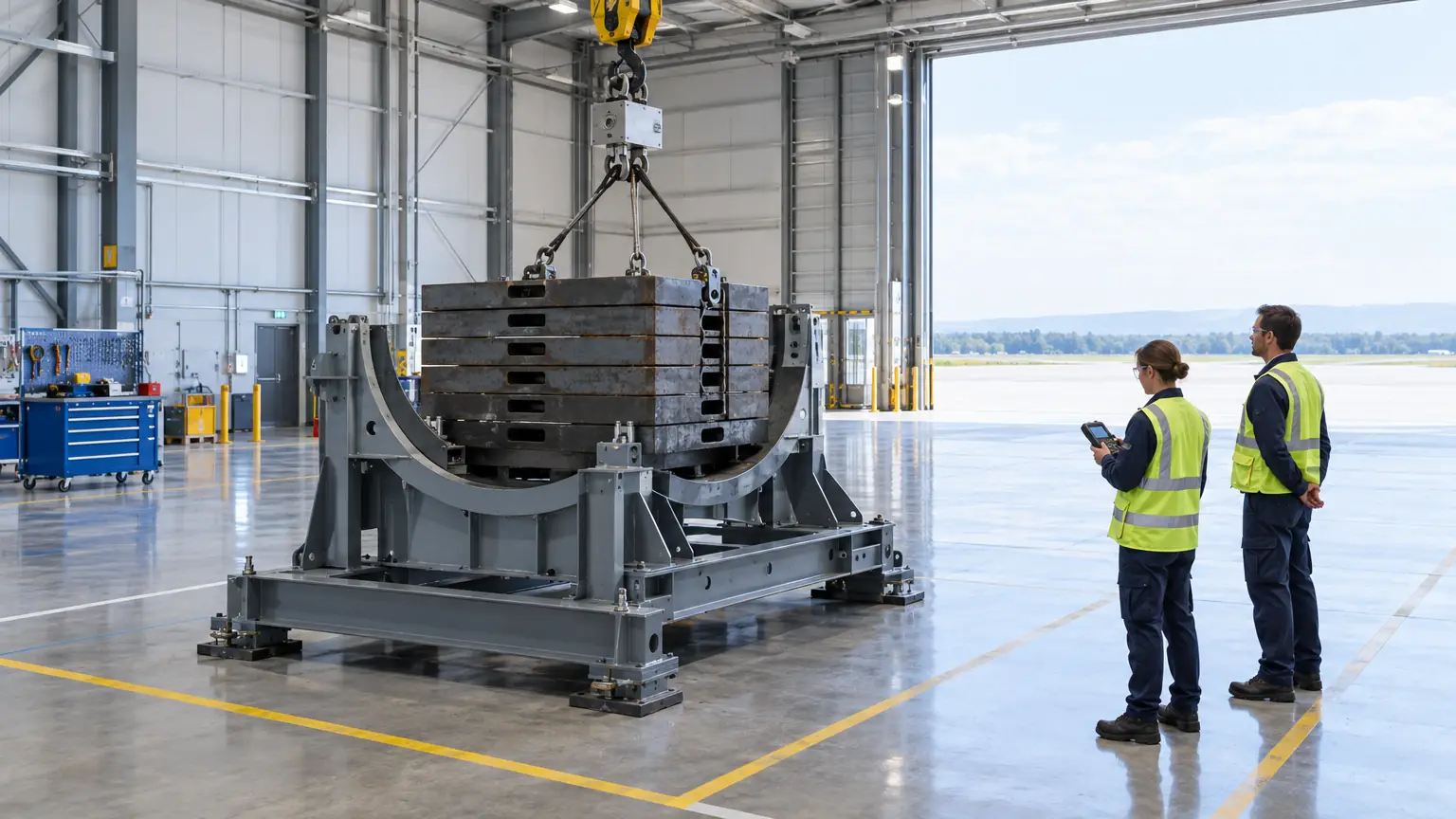
NASA-STD-8719.9C defines proof and periodic load tests for NASA lifting devices. Proof load tests are performed before first use and after repairs affecting load-bearing components; periodic tests at specified intervals. The standard sets critical sling and rigging hardware proof loads at 1.95 to 2.00 times rated capacity, and below-the-hook device periodic tests at 0.95 to 1.00 times rated capacity. For below-the-hook devices, proof test requirements follow the applicable ASME standard (B30.20 or B30.26). These rules apply to NASA lifting devices, not engine stands; the manufacturer’s documentation should provide stand-specific limits.
How much load is used to proof test a lifting beam or sling?#
OSHA 1910.184 requires proof testing welded end attachments on wire rope slings at twice rated capacity, repaired synthetic web slings at twice rated capacity, and metal mesh slings at minimum 1.5 times rated capacity. NASA-STD-8719.9C, within NASA operations, requires below-the-hook device proof testing per ASME B30.20 or B30.26. The 1.95 to 2.00 factor applies to NASA Critical slings and rigging hardware. These rules cover specific slings and NASA lifting devices, not engine stands; the manufacturer’s documentation should provide the proof factor.
| Equipment type | Test type | Load factor (multiple of rated capacity) |
|---|---|---|
| NASA Critical slings and rigging hardware | Proof load | 1.95 to 2.00 x rated capacity |
| Wire rope sling welded end attachments | Proof test | 2 x rated capacity |
| Repaired synthetic web sling | Proof test | 2 x rated capacity |
| Metal mesh sling | Proof test | minimum 1.5 x rated capacity |
| Overhead crane rated load test (max) | Rated load test | 125 percent of rated load |
| Load positioning devices | Proof load | 1.20 to 1.25 x rated capacity |
| Slings/below-the-hook lifting devices | Periodic load test | 0.95 to 1.00 x rated capacity |
Source: NASA-STD-8719.9C and OSHA 1910.184/1910.179
How often must slings and lifting gear be inspected?#
OSHA 1910.184 requires daily pre-use inspection of slings and all fastenings. OSHA 1910.179 sets frequent crane inspections at daily to monthly intervals and thorough monthly rope inspections. Alloy steel chain slings must be thoroughly inspected at intervals not exceeding 12 months. NASA-STD-8719.9C requires daily inspection of below-the-hook lifting devices for defects, and periodic load tests within one year before a NASA Critical lift unless designated non-load test. These intervals apply to slings, cranes, and NASA lifting devices, not engine stands; the manufacturer’s documentation should provide stand-specific inspection intervals.
Which NDT methods are used to find cracks in lifting hardware?#
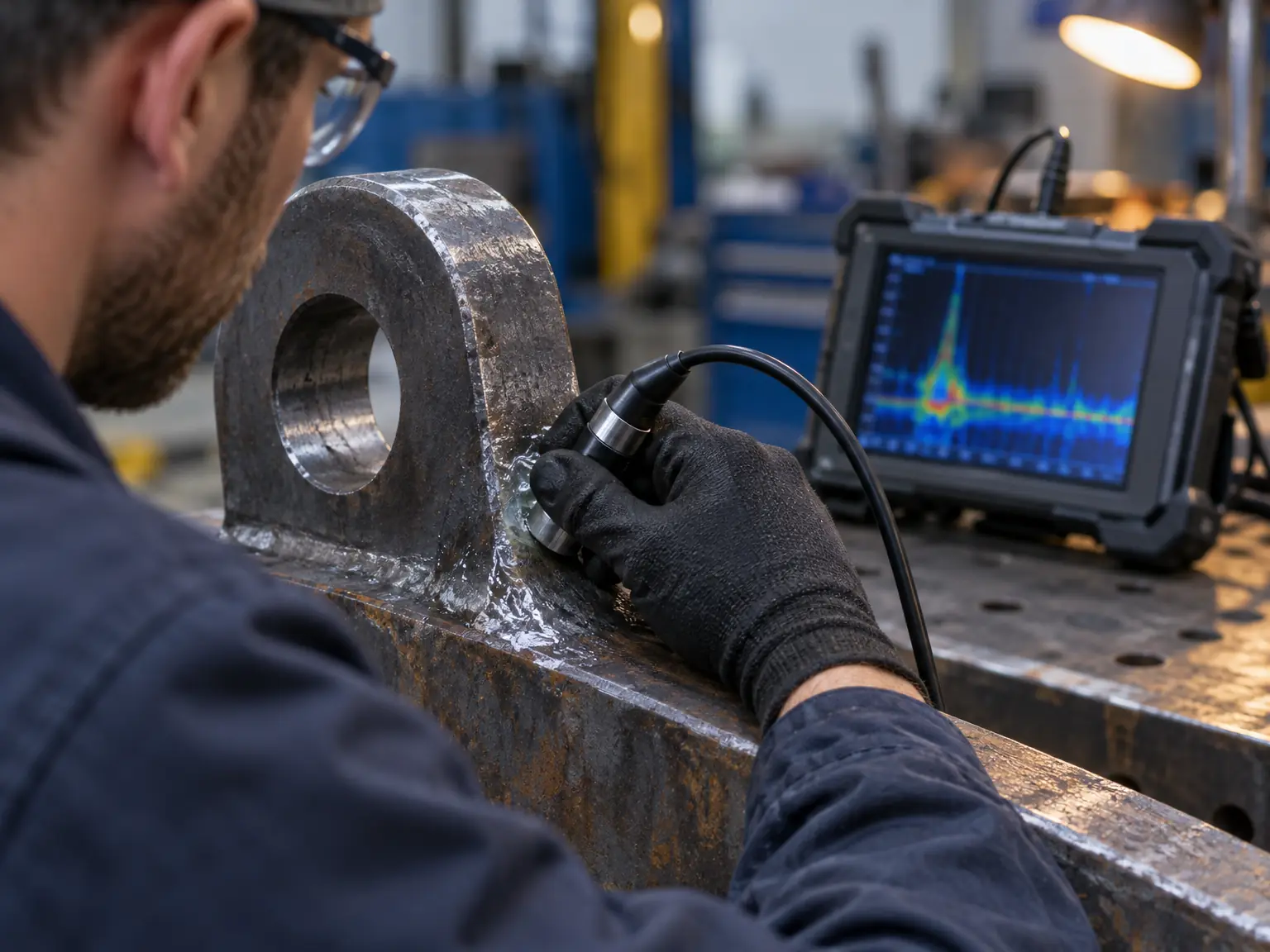
Magnetic particle inspection (MPI) detects surface and near-surface cracks in ferromagnetic steel; liquid penetrant inspection (PT) finds surface-breaking discontinuities. FAA Advisory Circular 43.13-1B addresses aircraft inspection and repair. It states that NDI personnel must be qualified to recognized standards such as MIL-STD-410 or ATA Specification 105. Applying that qualification practice to lifting hardware is a best-practice analogy, not an engine stand rule. NASA-STD-8719.9C requires surface NDT/NDE on hooks of cranes and critical-lift hoists after each proof and periodic load test. The Trent 700 product data does not list NDT methods; use the stand manufacturer’s documentation.
When does lifting equipment need to be re-tested after repair?#
NASA-STD-8719.9C requires a proof load test after repairs affecting load-bearing components (e.g., welding on load path) and after wire rope or load chain replacement. OSHA 1910.184 requires proof testing for welded end attachments on wire rope slings at twice rated capacity before initial use, and for repaired synthetic web slings at twice rated capacity. The employer must retain a certificate of the proof test. These rules cover NASA lifting devices and specific slings, not engine stands; if a stand’s lifting beam is repaired, the manufacturer’s documentation should specify re-testing and record requirements.
What documentation and tagging should accompany a load-tested engine stand kit?#
NASA-STD-8719.9C requires a durable tag on lifting devices after each periodic load test, stating the next test or expiration date. OSHA 1910.184 requires that proof test certificates for slings be retained and made available. Neither source addresses engine stands directly. The Trent 700 product data does not list tags, test certificates, or load test documentation; operators leasing a stand should request the manufacturer’s or owner’s documentation and confirm status with National Aero Stands before use.
How does the Trent 700 engine stand for the A330 fit into this inspection regime?#
The Trent 700 stand, rated at 3,317 kg for the A330-200/300, includes a bootstrap adaptor, collapsible tow-bars, engine steady mount, lifting beam kit, and castor spacers. The product page states the 3,317 kg figure as stand weight capacity; it does not list a lifting beam rating or below-the-hook classification. The stands.aero/product/trent-700/ stand is available from National Aero Stands. National Aero Stands, the company behind stands.aero, rents and leases aircraft engine stands to airlines and MROs for short- and long-term use, with an inventory covering CFM56, LEAP-1A/1B, V2500, GE90, Trent 500/700/1000, PW4000, RB211 and JT9D engines from brands including AGSE, DAE, GE and Rolls-Royce. Before using a leased stand, confirm maintenance and inspection status with National Aero Stands and the manufacturer’s documentation. Do not assume NASA or OSHA engine stand test factors apply. National Aero Stands can provide further information on stand availability.
| Specification | Detail |
|---|---|
| Engine compatibility | Rolls-Royce Trent 700 |
| Aircraft type | Airbus A330-200/300 |
| Weight capacity | 3,317 kg |
| Dimensions | 5,505 mm (L) x 3,606 mm (W) x 1,879.6 mm (H) |
| Ground clearance | Adjustable 70-170 mm |
| Key components | Bootstrap adaptor, collapsible tow-bars, engine steady mount, lifting beam kit, castor spacers |
| Safety features | Hydraulic suspension, swivel-lock casters, integrated brakes |
| Surface treatment | Skydrol-resistant paint |
| Manufacturing origin | USA |
Source: National Aero Stands product page
Entities in this article
Frequently Asked Questions
What is the proof load test requirement for a lifting beam on an engine stand?
Engine stands are not covered by NASA-STD-8719.9C or OSHA; NASA-STD-8719.9C, for NASA operations, defers below-the-hook proof load testing to ASME B30.20 or B30.26. The 1.95 to 2.00 factor applies to NASA Critical slings and rigging hardware. For a Trent 700 stand, the product page lists a lifting beam kit but no beam rating; the manufacturer's documentation should provide the applicable proof test load.
How often must an engine stand's lifting gear be load tested?
NASA-STD-8719.9C requires periodic load tests for below-the-hook devices within one year before a NASA Critical lift, unless designated non-load test. OSHA requires daily pre-use inspection of slings and thorough inspection of alloy steel chain slings at intervals not exceeding 12 months. These intervals apply to slings and NASA lifting devices, not engine stands; the manufacturer's documentation should provide stand-specific intervals.
What NDT method is used on engine stand welds?
Magnetic particle inspection detects surface and near-surface cracks in ferromagnetic steel. NASA-STD-8719.9C requires surface NDT/NDE on hooks of cranes and critical-lift hoists after proof and periodic load tests. For engine stand welds, the product data does not specify NDT methods; the manufacturer's documentation should specify appropriate NDT methods and intervals.